Fayetteville State University: Paving New Roads in the South
Fayetteville State University (FSU) is the second oldest public senior educational institution in North Carolina. It is the first grade school, high school, and state-supported normal school for Black Americans in the South[1].
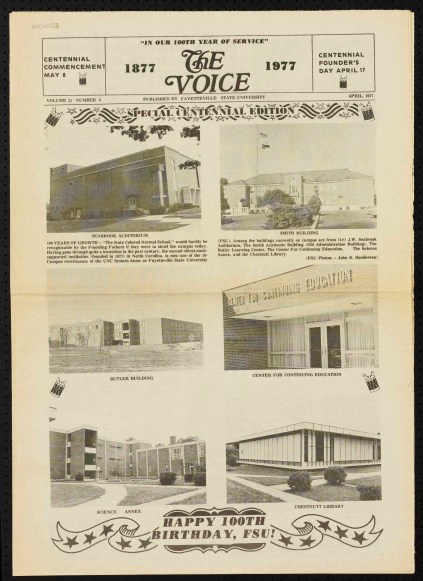
In 1867, seven African-American citizens paid 140 dollars for a lot on Gillespie Street in Fayetteville, North Carolina. This was done in hopes of serving the educational needs of Black children. In 1877, the Howard School, as FSU was known then, became the State Colored Normal School. In 1937 the State Board of Education authorized it to become a four-year college.
In 1969, the school became Fayetteville State University. On June 1, 1971, the UNC system incorporated the last ten state-funded universities, including the predominantly African-American institution of Fayetteville State University[2].
“All excellence involves discipline and tenacity of purpose”
The announcement of FSU’s “New Era of Excellence” in 1988 was a major point of growth for both FSU and the Fayetteville Community. Along with plans for major academic enrichment, a principal aim of the plan called for “significant increases in the University’s public service activities”[3]. 540 public service activities were begun to provide educational assistance to public schools, churches, civic clubs and other community and state organizations. It was through this plan that FSU further influenced the community and emerged as a leading institution in southeastern North Carolina.
Other programs such as the Capital Campaign of 1991 add to the influence Fayetteville State University has had on North Carolina and the South. In the plans for the Capital Campaign, the demand for service is listed as a criteria for FSU to meet. “A continually evolving, growing, and improving Fayetteville State University can assure that the answer…is a resounding ‘yes’” writes the author of the plan for Capital Campaign when asked if the community can provide an educated work force on a regular basis[4].
This growth continued with the appointment of Chancellor Dr. Willis B. McLeod in 1995. Several major initiatives such as the Freshman Year Initiative program aided the community through several outreach efforts aimed at forging stronger community[5].
The history of Fayetteville State University shows how its growth created new opportunities for the community of Fayetteville, and especially for African-Americans. Through the expansion of the university and its commitment to aiding both its students and the community beyond, FSU went above and beyond its original intent of serving the educational needs of Black children, becoming a leading institution in North Carolina.
 Fayetteville Case Studies